By Rinki Pandey December 9, 2025
The management of properties that are being rented out has turned into a very complicated task — the necessity for precise and automatic work is due to the increasing tenant demands, the shifts in the market, and the heightened compliance. Contemporary landlords are not very different from the wise business operators; they are managing the revenues, risks, and resident experiences just like the operators of a business. Property owners, therefore, are looking at the ROI of rental management software as a primary investment strategy instead of a luxury tool.
Through the transition from the manual administration of properties to the automation of property management, the landlords are not only improving accuracy but are also saving time and getting insights from data that lead to the boosting of long-term returns. The profitability that the rental management software will provide is not just a matter of convenience but also a direct effect on the bottom line. The financial impact of the reduced labour, shorter leasing cycles, and higher tenant satisfaction, among others, cannot be ignored. This technology allows for the efficient handling of rental properties, even if quite a number of them are under the same management, while still keeping the landlords informed through analytics about their smart asset decisions.
The rental market is getting more competitive, which is why it is now more important than ever for landlords to adopt software tools for managing properties as a way of ensuring that they will continue to have a steady flow of cash, their investments will be protected, and there will be cost savings from year to year.
Higher Operational Efficiency Marks the Beginning of the ROI of Rental Management Software.
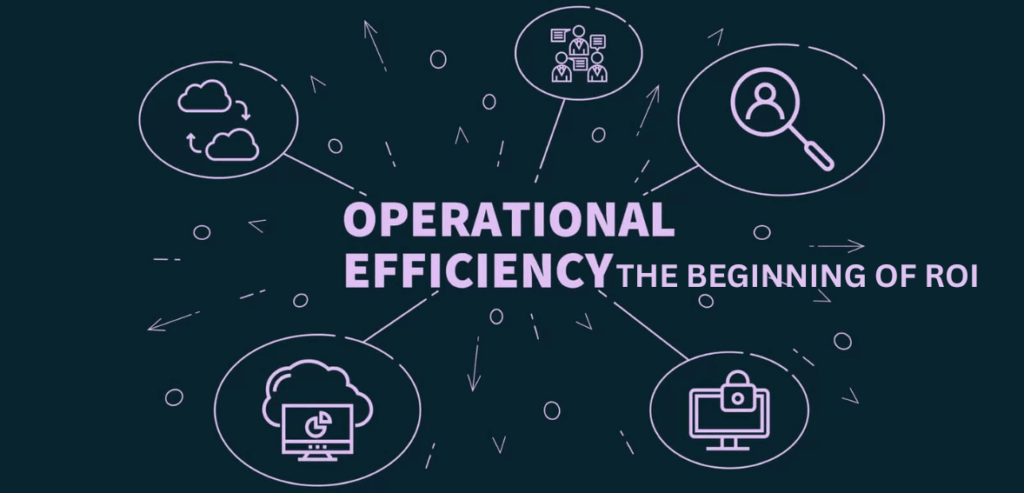
Operational efficiency is often the first measurable benefit when analyzing the ROI of rental management software. Whether managing one or one hundred units, automation significantly reduces the time spent on repetitive administrative work. Tasks such as rent collection, late fee enforcement, work order tracking, tenant applications, screening, lease renewals, and bookkeeping are handled automatically within the system.
Industry research indicates that property managers adopting digital workflows realize an up to 30–40% cut in administrative hours, a 70% increase in the speed of rent collection, and an even 25% fall in tenant disputes supported by communication records. Such advancements in property management directly lead to the efficiency of rental properties, as landlords can now devote more time to the growth of the property and less to the paperwork. Besides, the unified communication ties up tenants, vendors, and the staff in a single loop, thereby eliminating delays and miscommunication, which eventually leads to quick problem resolution and even more reliable high-quality service.
With time, operational excellence transforms into a competitive advantage for landlords who want to have their tenant retention rates not only maximized but also to improve their financial performance.
The ROI of Rental Management Software Through Cost-Saving for Landlords
Another value driver behind the ROI of rental management software is the long-term cost savings for landlords. The manual method of tracking repairs, invoices, and expenses is prone to mistakes and consequently to longer processes, thus raising the operational costs. Automatic management of vendor workflows assures that repair scheduling is done on time and follow-ups are consistently made, which ultimately prevents the emergence of costly emergency problems. Integrated financial reporting keeps expense entries accurate and ensures landlords take advantage of tax deductions without missing important write-offs.
Additionally, compliance alerts reduce legal risks by preventing problems like expired leases or improper notices. To give further context, several software providers claim that landlords manage to save more than $150 per unit every year by better controlling their costs, which can be considered a significant improvement since the rental profit margins are usually between 6% and 12%. They build up year after year, thus creating an effect of compounding value that enhances the overall profitability of the property in the long run. When landlords reduce dependency on manual labour or third-party administrative services, the investment in software rapidly pays for itself.
The ROI of Rental Management Software Improves Tenant Satisfaction and Retention
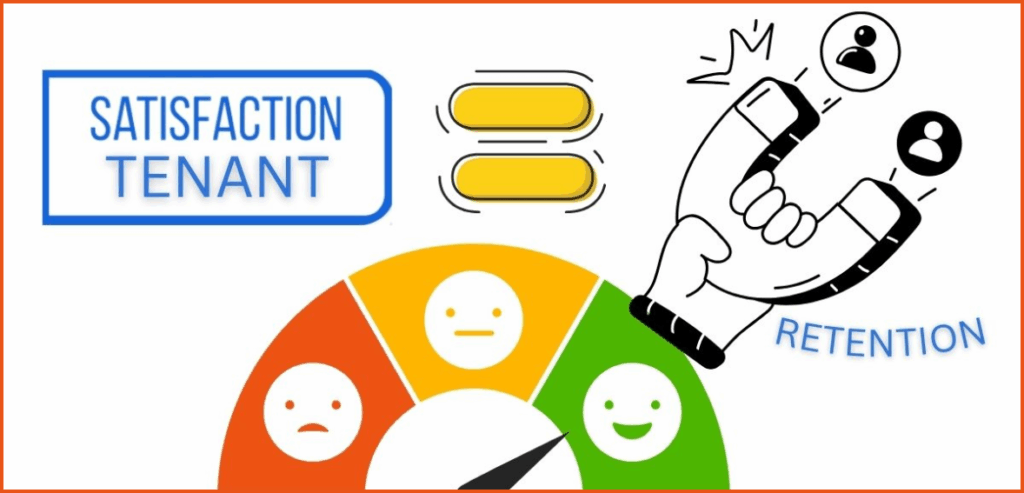
Tenant retention is one of the most important factors that directly affects the profitability of a rental property and is thus one of the key factors to consider under the ROI of rental management software. It is estimated that turnovers usually range from $1,800 to $5,000, considering all the costs related to repairs, vacancy periods during which the property is not being rented, and re-marketing the unit.
Through the introduction of self-service options like online maintenance requests, mobile rent payments, and faster communication responsiveness, rental management software aids in improving the overall tenant experience. By this, it is meant that the more than 50% of renters who now demand online payment options, and the more than 70% who would rather have digital than on-site communication for repairs, are given what they want; it is more likely that they will renew the lease. High retention results in low vacancy, increased efficiency of the rental property, and steady long-term income.
Additionally, tenants have a sense of being valued when their concerns are addressed without delay. This consequently leads to the formation of stronger ties between the landlord and tenant, and a decrease in conflict. Moreover, the easier it is to draw in quality applicants and reduce marketing costs, thus increasing profit margins, the better the reputation and the more positive reviews.
The ROI of Rental Management Software Reduces Vacancies Faster
Minimizing vacancy time is one of the strongest revenue drivers contributing to the ROI of rental management software. Software streamlines the leasing process by automatically publishing listings to top rental marketplaces, enabling online showing scheduling, and speeding up application screening using integrated background and rental history data. Many landlords report that digital leasing reduces turnover downtime by 50% to 75%. Accelerated tenant placement not only gives landlords a competitive advantage but also secures a more stable income.
The instantaneous communication with potential renters through automatic texting fosters quicker negotiations and, thus, lowers the number of emails and calls dropped. What’s more, online leasing aids in providing thorough statistics on the movement of applicants and the effectiveness of the listings, allowing landlords to quickly change the rent in order to maintain a full house. When vacancies shrink from weeks to days, the cash flow gains are both immediate and substantial.
The ROI of Rental Management Software Enhances Financial Reporting and Tax Prep

Accurate financials are essential for profitable decision-making, and automation plays a direct role here as well. The ROI of rental management software includes access to real-time cash flow dashboards, automated expense categorization, and immediate year-end tax reports. Features like digital receipt tracking and depreciation schedules reduce mistakes while helping landlords identify additional eligible deductions.
With the average landlord spending 30 to 50 hours annually preparing taxes, automation prevents errors and saves valuable time — while reinforcing the economic benefits of adopting landlord software tools. Detailed financial analytics enable smarter portfolio-level planning, such as identifying properties that need rent adjustments or capital upgrades. Instead of waiting for quarterly reviews, landlords can respond to financial issues instantly, protecting cash flow and minimizing loss.
The ROI of Rental Management Software Supports Scaling Your Portfolio
As landlords grow, spreadsheets rarely scale properly. Communication becomes inconsistent, maintenance tracking is easily lost, and compliance documentation is harder to manage. One of the main aspects when considering the ROI of rental management software is its scalability. The usage of centralized dashboards allows the landlord to oversee various properties, vendors, and even staff within the same department without the need for hiring new people for administration. Unified financial tracking across states and different property types ensures continued rental property efficiency even as the business expands.
This helps landlords delay staffing costs, a major source of cost-saving for landlords, while increasing profitability across a larger asset base. By standardizing processes and enforcing consistency across all units, software creates a more professional and reliable operation that can support long-term growth into new markets and asset classes.
The ROI of Rental Management Software Strengthens Risk Management and Compliance
Regulatory compliance is a growing challenge nationwide. The legal protections included in The ROI of rental management software ensure landlords remain aligned with fair housing laws, disclosure requirements, lease expiration rules, property management safety mandates, and deposit accounting standards. Digital storage ensures every communication and document is traceable for audits. With a single rental lawsuit exceeding $30,000 in settlements, the protective role of property management automation becomes extremely valuable. Risk isn’t limited to legal exposure — missed maintenance records, financial inaccuracies, and tenant communication gaps can all generate costly disputes. Software safeguards rental operations by automatically flagging high-risk issues and documenting resolution timelines, strengthening landlord defence against claims.
The ROI of Rental Management Software Through Data-Driven Decision Making

Landlords make better investment decisions when they have stronger visibility into financial performance. The return on investment (ROI) for using rental management software features consists of analytics such as the detection of low-performing apartments, the revelation of income opportunities, cash flow change prediction, maintenance trend monitoring, and even future failure prediction.
Revenue was up by 3% to 7% a year with the implementation of rent-optimization tools, which largely depended on the local market. Higher quality decision-making has a direct impact on the net operating income (NOI), turning landlord software into a strategic asset for growth. By providing accurate data instead of estimates, software eliminates guesswork and highlights exactly where landlords should spend or cut to enhance profitability. Superior portfolio intelligence becomes a sustainable competitive advantage.
Case Example: The ROI of Rental Management Software for Small Landlords
To illustrate the ROI of rental management software, consider a landlord managing twelve units in Texas. Through faster leasing activity, reduced vacancy resulted in an annual revenue improvement of $4,200. Enhanced rent collection workflows generated an additional $1,080 in recovered payments. Compliance alerts prevented a potential $600 in late disclosure penalties over the year. The combination of automated financial reporting and maintenance coordination led to a significant reduction of administrative hours that equated to $2,400 in savings through time value.
In total, the property owner experienced an annual profit increase of $8,280. Considering that the software costs are roughly $720 per year, the total return was an outstanding 11.5× ROI—signifying that the landlords had already saved quite a bit before and even during portfolio expansion. However, the added units resulted in an exponential growth in ROI since the operational overhead does not increase at the same pace as the revenue—this has also proven that the software adoption was a smart and strategic investment.
Conclusion
The profitability of real estate relies on steady cash flows, low risks, and excellent management. Every dollar spent on rental management software is an investment that helps in all these areas by taking over non-core tasks, bringing in better and faster support to the tenants, and providing more and better financial insights. With technology at their disposal, landlords can become professionals, increase their business in a cost-effective way, and meet the ever-increasing demands of customers in the fast-changing rental market.
Conversely, property management automation is the process that allows landlords to lighten their load, avoid expensive errors, and gradually increase their property performance and profit. The data intelligence and workflows enabled by landlord software tools ensure every decision is supported by insights rather than guesswork. For those seeking sustainable financial gains, lower expenses, and enhanced rental property efficiency, investing in modern management software isn’t just an upgrade — it’s a strategic move toward long-term profitability and cost-saving for landlords across every aspect of their business.
FAQs
Is the ROI of rental management software worth it for single-property landlords?
Yes, even a unit benefits from property management automation through faster payments, digital communication, and tax accuracy.
Can rental management software lower legal risks?
Yes, compliance tracking and documentation prevent costly violations and disputes.
What is the biggest driver of rental property efficiency?
Automation of operational tasks such as rent collection, screening, and maintenance response times.
Will the ROI of Rental Management Software help with taxes?
No doubt about it, financial categorization and instant reporting make tax preparation easier and help to claim the maximum deductions.
When will the results be noticeable?
Numerous landlords notice advantages like smoother payments and maintenance processes right from the first three months.